What are Dental Implants?
Dental implants are metal posts that replace the root of missing teeth. In most cases, these posts are made from titanium or zirconia. An oral surgeon first removes the damaged tooth. If needed, they may also perform a bone graft. After that, the surgeon places the dental implant into the jawbone.
Over time, a process called osseointegration occurs. During this process, the bone grows around the implant and creates a strong connection. As a result, the implant becomes a stable foundation.
Next, your dentist places a crown on top of the implant. This crown replaces the visible part of the tooth. In addition, it is designed to look natural and match your smile. Overall, dental implants can restore both the function and appearance of your teeth.
Benefits of Dental Implants
Dental implants offer a reliable solution for replacing one or more missing teeth. Unlike dental bridges, they do not require removing healthy structure from nearby teeth. As a result, they help preserve your natural teeth and are easier to clean.
In addition, dental implants stay in place, unlike removable partial dentures. This means you do not need to take them out for cleaning or maintenance.
When replacing all of a patient’s teeth, dental implants provide a fixed and stable option. This improves stability for chewing and speaking. As a result, patients often experience better comfort and function.
Furthermore, dental implants are very durable. In many cases, they can last for many years and may last a lifetime.
However, some maintenance may be needed over time. For example, a dentist may need to re-tighten or replace the crown due to normal wear.
Even so, the long-term benefits of restoring your smile make dental implants a worthwhile investment.
What Dental Implants Can Do For You
Dental implants can replace one or more missing teeth without affecting adjacent teeth. As a result, they help preserve your natural tooth structure. In addition, they can help resolve joint pain or bite problems caused by teeth shifting into missing tooth spaces.
Dental implants also restore a patient’s confident smile. Furthermore, they improve overall appearance and self-esteem. They also help restore normal chewing, speech, and digestion. This makes everyday activities more comfortable and efficient.
In some cases, dental implants can restore or enhance facial tissues. As a result, they support a more natural facial structure. Additionally, dental implants can provide strong anchorage for dentures. This makes dentures more secure and comfortable.
Finally, dental implants can replace all of your teeth in a single procedure. This offers a stable, long-term solution for full-mouth restoration.
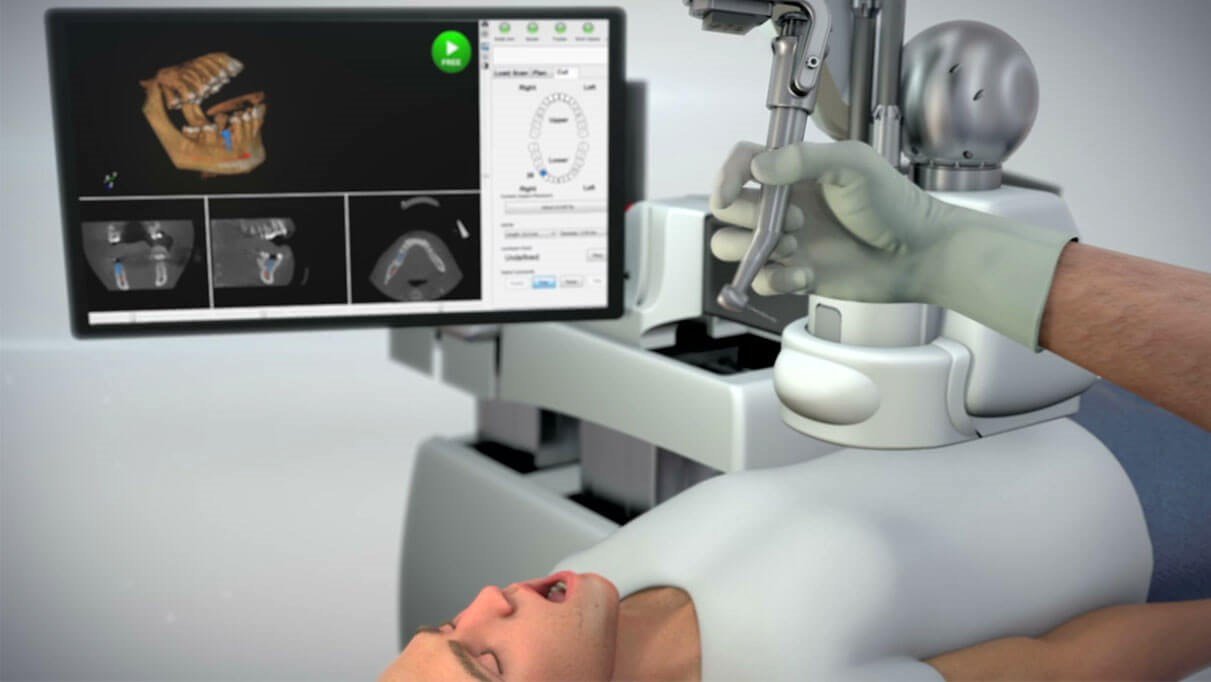
Robot-Assisted Dental Implantation Surgery
Our surgeons at Eastern Virginia Oral & Maxillofacial Surgery use Yomi®, a new alternative to traditional surgical techniques that provides dental surgeons with robotic guidance during surgery.
If Yomi® is right for you, your dental team will create a custom treatment plan. In addition, this plan will be made using Yomi® software. During surgery, Yomi will assist your surgeon. Yomi® will provide important information that your surgeon can feel, hear and see. More importantly, Yomi® will guide your surgeon to place your implant precisely to plan.
Yomi® is the first and only FDA-cleared robot-assisted dental surgery system, designed to provide assistance to the surgeon in planning and placing dental implants. This helps your surgeon place your implant precisely for a natural look and feel. Yomi® allows your surgeon to quickly make changes to your surgical plan, which clearly makes the treatment easier for both you and your surgeon. Besides, Yomi® may also allow for less invasive dental implant surgery. Please note that Yomi® is not indicated for patients with no teeth.
What to Expect with Dental Implantation Surgery
The dental implant process typically requires several visits over a few months. First, your dentist will complete a consultation and take a panoramic X-ray. This helps determine if you are a good candidate for dental implants.
During this evaluation, your dentist checks for:
- Sufficient bone support
- Healthy gum tissue
- Proper spacing for the implant
- Any medical conditions that may affect healing
If you are a candidate, your dentist will take a CBCT scan. This 3D image allows for precise planning of your implant placement.
Procedure and Healing
Depending on your needs, the procedure may be done using:
- Local anesthesia
- Local anesthesia with nitrous oxide (laughing gas)
- IV sedation
During the procedure, your dentist removes the damaged tooth, if present. Then, they place the dental implant into the jawbone.
In some cases, your dentist places the implant at the same time as the tooth extraction. However, if bone support is limited, a bone graft may be needed first. In these cases, the area heals for about 3–6 months before implant placement.
Once placed, the implant undergoes osseointegration. This is the process where the bone grows around the implant and creates a strong connection. This process usually takes 3–5 months.
Additional Steps
In some cases, your dentist may place a healing abutment. This small component helps shape the gum tissue around the implant. As a result, it prepares the area for the final crown. If the bone is strong enough, the healing abutment may be placed during the same visit as the implant.
If the implant is in a visible area, you may receive a temporary tooth. This can be a temporary crown or a clear Essix retainer. This helps maintain your smile during the healing process.
Final Restoration
After healing is complete, you will return to your dentist. At this stage, your dentist will take impressions of your teeth and implants.
These impressions are used to create your final crown or bridge. Once ready, you will return to have the restoration placed.
In some cases, adjustments may be needed. Therefore, this step may require one or two visits over several weeks to ensure a proper fit and comfortable bite.
Aftercare
After treatment is complete, your dentist will provide care instructions. To protect your implant, it is important to:
- Maintain good oral hygiene
- Follow healthy eating habits
- Visit your dentist regularly
These steps help extend the life of your dental implant and support long-term success.
Non-Urgent Questions? Contact Us.
Non-Urgent Questions? Contact Us.