What are Dental Implants?
Dental implants are metal (usually titanium or zirconia) posts that replace the root portion of missing teeth. An oral surgeon performs the extraction of the tooth with any necessary bone graft as well as the surgical placement of the dental implants. After, a process called osteo integration whereby the body forms a bony connection to the implant surface your dentist places the crown or tooth portion that sits on top of the implant. These teeth are very natural looking and often enhance or restore a patient’s smile!
Benefits of Dental Implants
Dental implants offer a very reliable method for replacing individual or several missing teeth, and unlike bridges they do not require removal of tooth structure from adjacent teeth and are easier to clean. When compared to removable partial dentures they stay in and do not have to be removed. If replacing all of a patient’s teeth, dental implants offer a fixed option whereby the patient has more stability of the teeth for chewing and talking. Furthermore, dental implants are very durable, and they will last for many years and possibly the remainder of your life. On occasion, a dentist will need to re-tighten or replace the crown due to normal wear. However, the benefits of restoring your smile make the occasional maintenance worthwhile.
What Dental Implants Can Do For You
- Replace one or more missing teeth without affecting adjacent teeth.
- Resolve joint pain or bite problems caused by teeth shifting into missing tooth spaces.
- Restore a patient’s confident smile.
- Restore chewing, speech, and digestion.
- Restore or enhance facial tissues.
- Provide anchorage for a denture, making it more secure and comfortable
- Replace all of your teeth in one procedure
What to Expect with Dental Implantation Surgery
The process of getting implants requires a number of visits over several months. First, a two-dimensional panoramic radiograph and a consultation are completed to ensure that the patient is a candidate for dental implants. This is to ensure there are no medical issues that would cause increased risk of implant failure and evaluate if there is adequate support from the bone, healthy gum tissue, and adequate spacing for an implant. If the patient is determined to be a candidate for dental implants a CBCT, which is a 3-dimensional radiograph, is captured to digitally plan the placement of the dental implant(s). Depending on the patient’s medical history and specific needs they may be a candidate for the procedure under local anesthesia, local anesthesia with nitrous oxide (laughing gas), or intravenous sedation. During the procedure the tooth is extracted, if present. Depending on the available bone the patient will either receive an implant at the time the tooth is removed with bone grafting or a bone graft that is covered with a membrane that will either absorb or require removal followed by approximately 3-6 months of healing before the patient returns for the placement of the implant as a second surgery. During either the immediate implant placement or at the second stage implant placement procedures the dental implant will be surgically placed into the bone and allowed to undergo osteointegration which usually takes 3-5 months. Osteointegration is the process where the bone forms a strong connection to the dental implant so that it can be chewed upon. In addition, depending on the quality of the bone, a second or third procedure may be required in order to place the “healing abutment” that will shape the gum tissue around the top of the implant to allow for the fabrication of the future crown, or artificial tooth, that is attached to the implant. If the bone is of good quality at the time of placement then the “healing abutment” may be placed at the time the dental implant is placed. For teeth that are within the patient’s smile the patient may be a candidate for placement of a temporary crown or a clear Essix retainer, which is a clear retainer, that will replace the patient’s missing tooth or teeth during the healing process.
After the osteointegration of the implant has occurred the patient would return to their dentist. The dentist will obtain a traditional or digital impression of the adjacent teeth and implant(s) for the fabrication of the crown(s). Once the crown or bridge has been made then the patient would then return for delivery and any adjustments to ensure the patient has a great bite. Depending on the fabrication process of the crown, several visits may be required to ensure that the crown is the right fit, this step may take one to two months to complete.
You will receive care instructions when your treatment is complete from your general dentist. Most importantly, good oral hygiene, eating habits, and regular dental visits will aid in the life of your new implant.
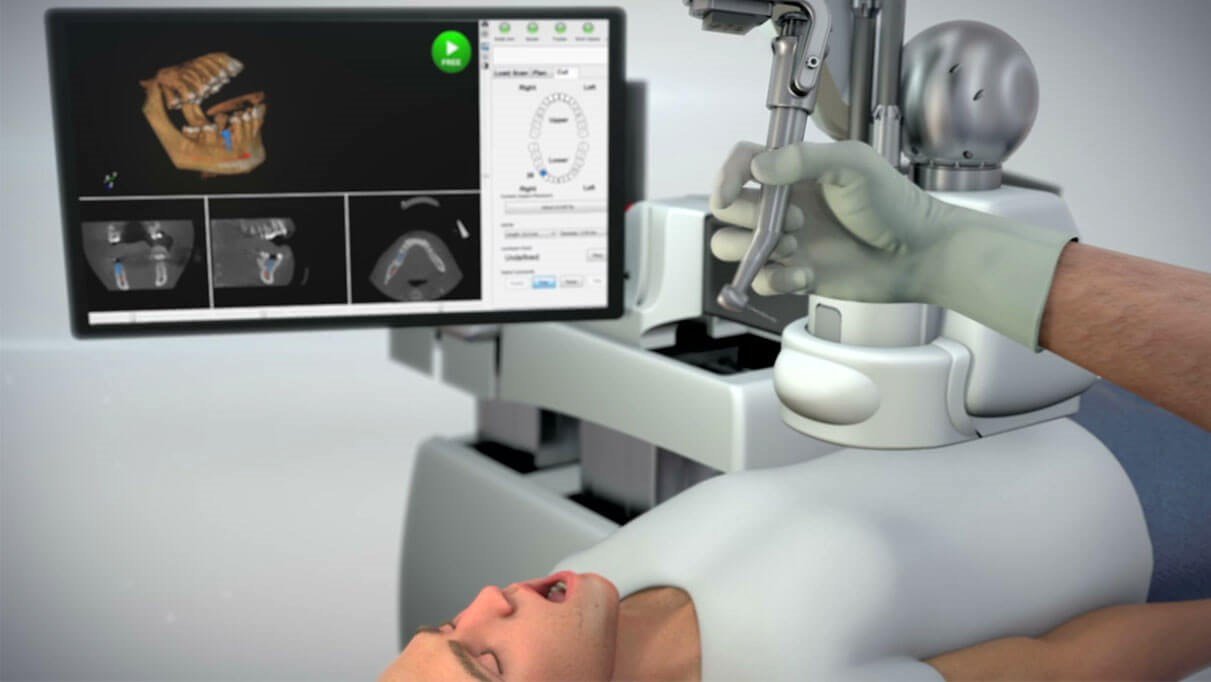
Robot-Assisted Dental Implantation Surgery
Our surgeons at Eastern Virginia Oral & Maxillofacial Surgery use Yomi®, a new alternative to traditional surgical techniques that provides dental surgeons with robotic guidance during surgery.
If Yomi® is right for you, your dental team will create a custom treatment plan. In addition, this plan will be made using Yomi® software. During surgery, Yomi will assist your surgeon. Yomi® will provide important information that your surgeon can feel, hear and see. More importantly, Yomi® will guide your surgeon to place your implant precisely to plan.
Yomi® is the first and only FDA-cleared robot-assisted dental surgery system, designed to provide assistance to the surgeon in planning and placing dental implants. This helps your surgeon place your implant precisely for a natural look and feel. Yomi® allows your surgeon to quickly make changes to your surgical plan, which clearly makes the treatment easier for both you and your surgeon. Besides, Yomi® may also allow for less invasive dental implant surgery. Please note that Yomi® is not indicated for patients with no teeth.
Non-Urgent Questions? Contact Us.
Non-Urgent Questions? Contact Us.