
Bone Grafting in Hampton Roads
When you need bone grafting, choosing an experienced surgical team matters. At Eastern Virginia OMS, our oral surgeons provide personalized bone grafting treatment to rebuild lost or damaged jawbone and create a strong foundation for dental implants.
Advanced Dental Bone Grafting for a Stronger Foundation
Your jawbone provides essential support for your teeth and dental implants. However, bone can deteriorate after tooth loss, tooth extraction, periodontal disease, infection, or injury. When there is not enough bone to support a dental implant, bone grafting may be recommended.
Dental bone grafting restores volume and strength to areas where bone has been lost. Depending on your needs, a bone graft can rebuild the height, width, or depth of the jawbone and provide the support needed for future dental implant treatment.
At Eastern Virginia OMS, our experienced oral surgeons use advanced imaging and precise surgical techniques to evaluate your jawbone and develop a treatment plan designed around your individual needs.
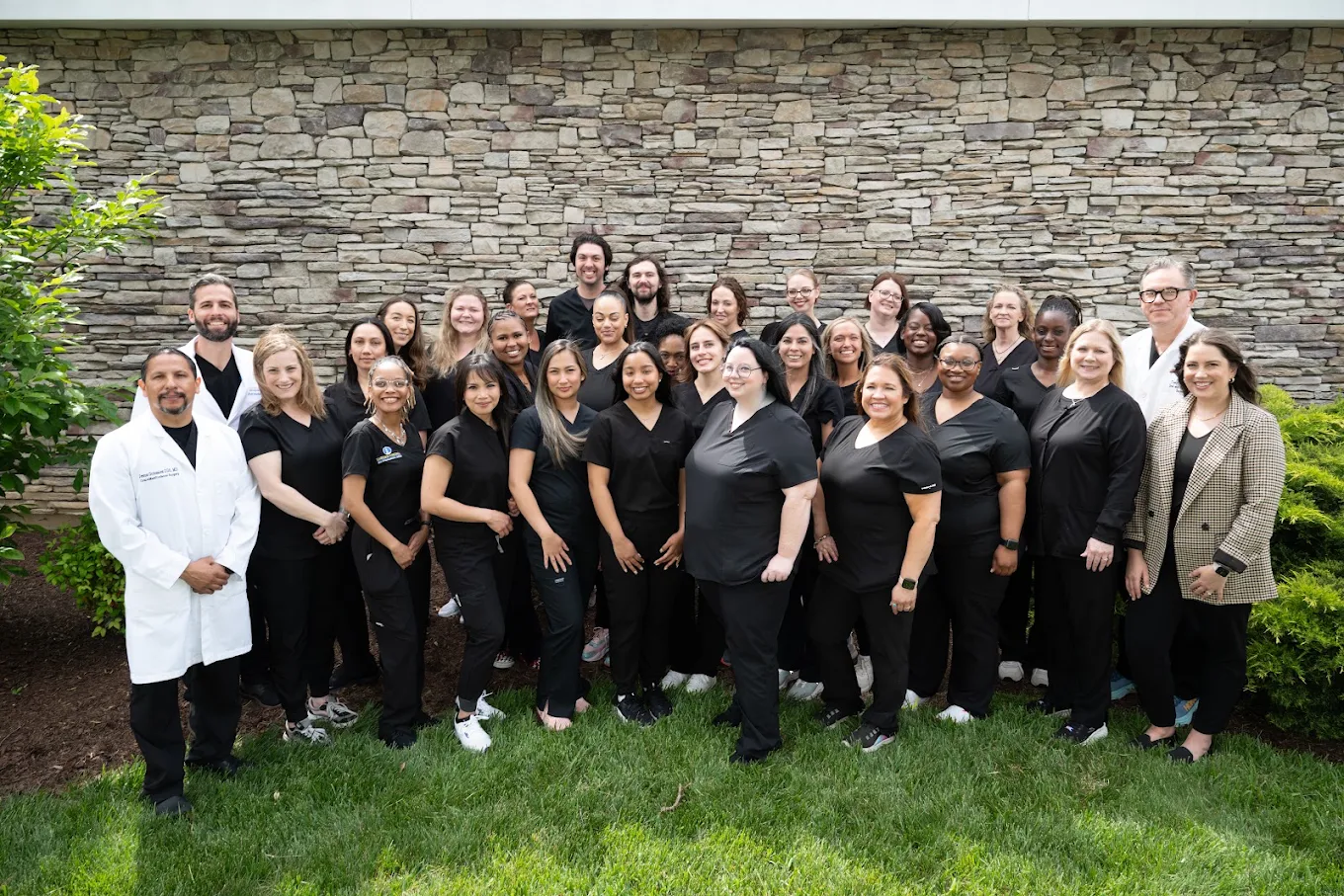
Visit our brand new, state-of-the-art offices. Enjoy an awesome staff and low wait times—we respect your time and treat you with a gentle touch.
Our Procedures
- Dental Emergencies
- Apicoectomy
- Bone Grafting
- Corrective Jaw Surgery (Orthognathic Surgery)
- Dental Extractions
- Dental Implants
- Facial Trauma Reconstruction
- Impacted Canines
- Oral Cancer Exam
- Oral Pathology
- Panoramic X-Rays
- Ridge Modification
- Sedation Dentistry
- Sinus Augmentation
- Sleep Apnea
- Sleep Apnea Appliances
- Soft Tissue Grafting
- TMJ (Temporomandibular Joint Disorders)
- Wisdom Teeth Extractions
Why Is Bone Grafting Needed?
Bone grafting may be recommended when the jaw does not have enough healthy bone to support a dental implant or properly restore an area affected by bone loss.
Common causes of jawbone loss include:
- Tooth loss: Missing teeth can cause the surrounding jawbone to gradually deteriorate.
- Tooth extraction: Bone grafting after tooth extraction may help preserve the shape and volume of the jaw.
- Periodontal disease: Advanced gum disease can damage the bone supporting the teeth.
- Infection: Dental infections can damage the surrounding bone.
- Injury or trauma: Facial injuries can cause bone loss or defects that may require reconstruction.
- Long-term tooth loss: The longer a tooth is missing, the more significant bone loss may become.
Bone Grafting for Dental Implants
Dental implants require sufficient bone support to remain stable. If the jawbone has deteriorated, there may not be enough healthy bone to securely place an implant.
Bone grafting for dental implants can rebuild the treatment area before implant placement. In some cases, the graft may be performed at the same time as implant surgery. In other situations, the bone needs time to heal before the implant can be placed.
Your oral surgeon will evaluate your bone volume and overall oral health using diagnostic imaging to determine which approach is appropriate for you.
Types of Bone Grafts
Several types of bone graft materials can be used in oral surgery. Your surgeon will recommend the appropriate option based on the location and extent of bone loss and your treatment goals.
Autogenous Bone Graft
An autogenous bone graft uses bone taken from another area of your own body. This may be considered when a larger amount of bone is needed for reconstruction.
Allograft
An allograft uses processed donor bone. This option can provide a source of bone material without requiring bone to be harvested from another area of your body.
Xenograft
A xenograft uses processed bone from an animal source, commonly bovine bone. This material can help provide a framework that supports new bone formation.
What Does A Bone Graft Procedure Involve?
Bone Grafting After Tooth Extraction
A bone graft may be recommended at the time of a tooth extraction to help preserve the natural contours and volume of the jawbone. This is sometimes called socket preservation.
Preserving bone after extraction can be particularly important for patients who plan to replace the missing tooth with a dental implant in the future. Your oral surgeon can determine whether grafting is appropriate based on your individual treatment plan.
Sinus Bone Grafting
When upper back teeth are missing, bone loss can sometimes leave insufficient space between the jawbone and the maxillary sinus for dental implant placement. A sinus augmentation, also called a sinus lift, may be recommended to increase the available bone in this area.
Eastern Virginia OMS provides sinus augmentation as part of comprehensive implant and bone grafting treatment. Your surgeon will use advanced imaging to evaluate the area and determine whether a sinus lift or another bone grafting procedure is appropriate.
Bone Grafting Recovery
Some swelling, tenderness, or discomfort is normal after bone graft surgery. Your oral surgeon will provide specific aftercare instructions to help protect the graft and support proper healing.
The amount of time required for healing varies depending on the location and size of the graft, the type of procedure performed, and your individual healing process. Your surgeon will let you know when the area is ready for the next stage of treatment.
Why Choose Eastern Virginia OMS for Bone Grafting?
Eastern Virginia OMS provides specialized oral and maxillofacial surgery throughout Hampton Roads. Our experienced surgeons use advanced imaging, modern surgical techniques, and personalized treatment planning to address complex bone loss and prepare patients for restorative treatment.
Whether you need bone grafting after a tooth extraction, bone reconstruction before dental implants, or treatment for another type of jawbone defect, our team can evaluate your needs and explain your options.

Schedule A Bone
Grafting Consultation
If you have been told you do not have enough bone for a dental implant or need treatment for jawbone loss, Eastern Virginia OMS can help you understand your next steps.
Have your referral available when you call to schedule an appointment. Our team is here to answer your questions, explain your treatment options, and help you find an appointment time that works for you.
Why do I need a bone graft before dental implants?
A bone graft may be needed when there is not enough healthy jawbone to securely support a dental implant. Grafting can rebuild the treatment area before implant placement.
Can I get a bone graft after a tooth extraction?
How long does a bone graft take to heal?
Healing time varies depending on the type and size of the graft and your individual recovery. Your oral surgeon will let you know when the graft is ready for the next stage of treatment.
Is bone grafting painful?
The treatment area is numbed during surgery, and sedation may be available. Some swelling and discomfort are normal afterward, and your surgeon will provide aftercare instructions.
Schedule A Bone Grafting Consultation
If you have been told you do not have enough bone for a dental implant or need treatment for jawbone loss, Eastern Virginia OMS can help you understand your next steps.
Have your referral available when you call to schedule an appointment. Our team is here to answer your questions, explain your treatment options, and help you find an appointment time that works for you.
Frequently Asked Questions
Why do I need a bone graft before dental implants?
A bone graft may be needed when there is not enough healthy jawbone to securely support a dental implant. Grafting can rebuild the treatment area before implant placement.
Can I get a bone graft after a tooth extraction?
How long does a bone graft take to heal?
Healing time varies depending on the type and size of the graft and your individual recovery. Your oral surgeon will let you know when the graft is ready for the next stage of treatment.
Is bone grafting painful?
The treatment area is numbed during surgery, and sedation may be available. Some swelling and discomfort are normal afterward, and your surgeon will provide aftercare instructions.